Beyond LinkedIn: How B2B brands market in 2026 [Updated]
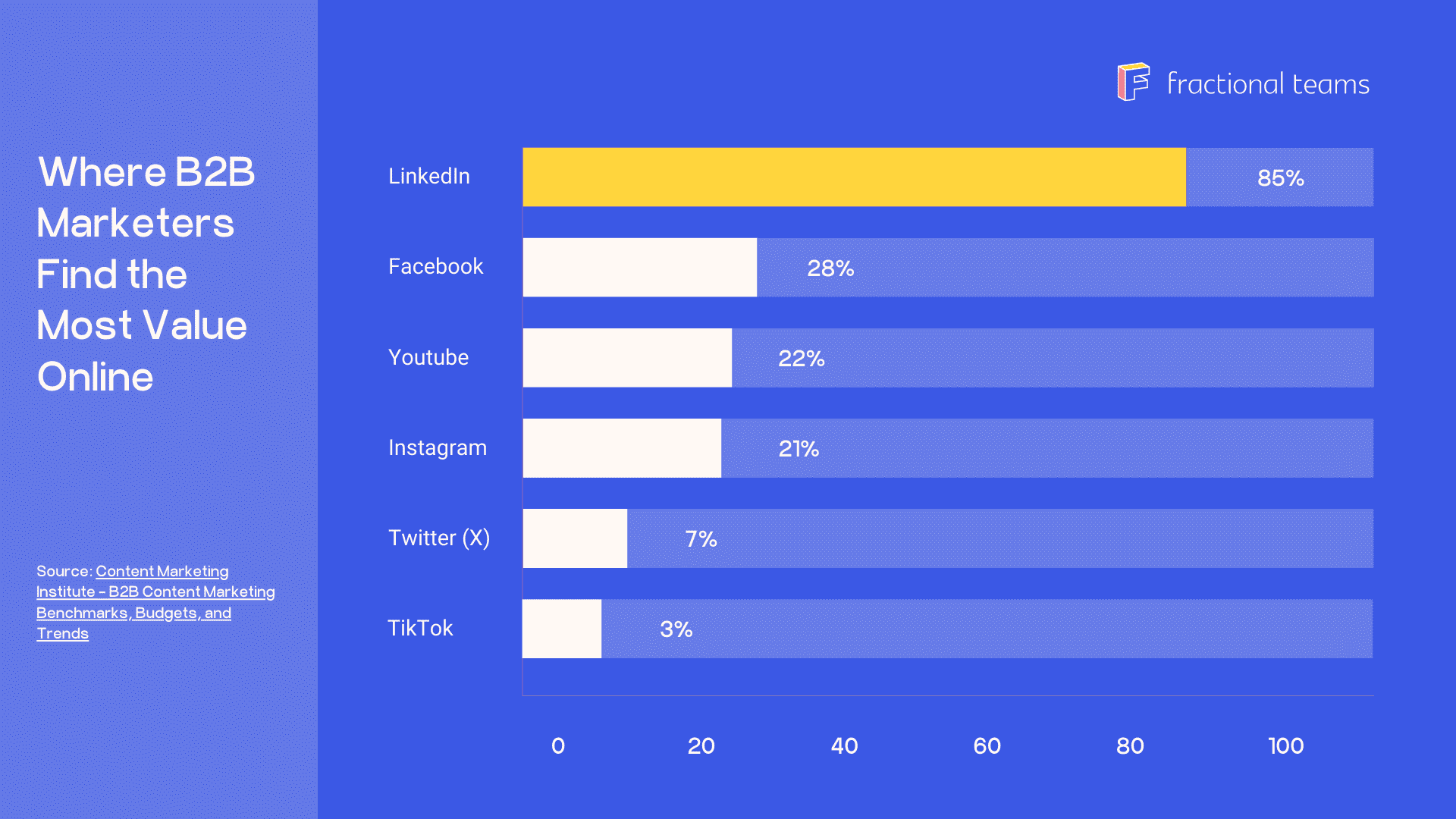
In 2025, LinkedIn was the go-to platform for B2B tech marketing, especially in fields like cloud and enterprise software. A whopping 86% of B2B marketers use LinkedIn, making it by far the most-used social network in this space. And it’s not just about presence.
Nearly half of B2B marketers say LinkedIn brings them the best quality leads of any channel. With an audience of professionals (over 1.8 billion visits monthly as of early 2025) primed for business content, LinkedIn has become a central hub for content marketing and prospecting.
Company pages share case studies and product news, while sales teams prospect via LinkedIn’s tools. Many startups even encourage their founders and experts to post on LinkedIn, treating personal profiles as extensions of the brand. It’s clear that LinkedIn is an indispensable channel for B2B tech brands – but it’s not the only one.
If you’re just starting to build your content strategy, here’s a helpful guide on the essentials of B2B content marketing.
But in 2026, high-performing B2B brands are no longer asking “What is our LinkedIn strategy?” They’re asking:
- How do we orchestrate multiple influence channels?
- How do we measure attribution beyond last-click?
- How do we ensure our content is discoverable by both humans and AI?
The 2026 reality is: LinkedIn is one node in a much broader ecosystem.
The brands growing fastest are building integrated, AI-ready, data-backed marketing systems that extend well beyond a single platform.
Table of Contents
The 2026 B2B marketing landscape
Three structural shifts are shaping how B2B brands market today:
1. AI is now embedded across the entire marketing stack
Marketers are now using generative AI not just for content creation, but as:
An audience intelligence engine
A personalisation layer
A measurement accelerator
A distribution optimiser
AI influences what buyers see, how they discover businesses, and which brands are surfaced in AI-powered search environments.
2. Attribution has matured
Last-touch attribution metrics are not working anymore. Serious B2B teams are aligning marketing with revenue operations, measuring:
Revenue influenced
Pipeline acceleration
Buying group engagement
Deal velocity
The focus has shifted from generating leads to enabling confident commercial decisions.
3. Buyers consume across fragmented environments
Today’s B2B buyer:
Reads AI summaries
Participates in niche communities
Watches short-form video
Engages on Reddit/Quora
Uses generative search interfaces
Attention is distributed. Influence must be too.
LinkedIn still matters, but it's not enough
LinkedIn remains the dominant B2B channel in 2026, largely due to its concentration of decision-makers and its increasingly sophisticated targeting and analytics tools. For many B2B teams, it’s still the most reliable source of high-intent visibility and commercially relevant engagement. LinkedIn is still used by B2B brands to build credibility, distribute expertise-led content, and stay present throughout long buying cycles.
Scroll through any tech decision-maker’s feed today, and you’ll see a mix of short-form thought leadership, carousels, opinion threads, founder commentary, event takeaways, and practical “how-to” content – all designed to start conversations and shape buying perceptions over time.
The best B2B brands use LinkedIn to educate, challenge assumptions, and show real expertise, not just to push product updates. In 2026, the advantage comes from consistency, clarity, and authenticity. Below, we outline some of the most effective LinkedIn tactics B2B companies can use right now.
Winning LinkedIn tactics
B2B marketers today use a mix of content formats on LinkedIn to achieve greater reach and engagement. Here are some of the top tactics that work on LinkedIn, with practical tips for each:
Short videos
In 2026, video content drives higher engagement, often 2-3x more, and superior reach on LinkedIn compared to static images or text-only posts. Video also generates 20x more shares. It is highly effective for building trust and personal connection. While video wins on reach, text-only posts are better for driving comments (15% more than visual posts), and images are effective for providing quick, actionable, or, behind-the-scenes content.
The best strategy often involves a mix. Use video for visibility and storytelling; text and images for knowledge sharing.
Thought leadership posts
These are short, personal posts (often 150–300 words) from founders, engineers, or other experts at the company. In 2026, they remain gold for engagement. A CTO sharing a lesson learned or a hot take on industry news can generate plenty of comments. Audiences respond to authentic insights over corporate-speak. Encouraging your team to share what they’re learning or observing makes your brand feel more human and builds trust.
A genuine 200-word story or opinion can go further than a polished press release on LinkedIn.
If your brand’s voice still plays it safe, it might be time to challenge that. Here’s why being bold can pay off in B2B
Carousel posts
Those swipeable decks are currently the highest-engagement format on LinkedIn. They’re perfect for breaking down a process or sharing data in a visual way. Because users tend to swipe through multiple slides, carousels keep people engaged longer (which LinkedIn’s algorithm loves).
For example, a startup might repurpose a blog into a carousel like “5 Cloud Cost-Saving Tips (in 5 Slides)”. These often stand out in the feed and can easily hit impression rates of 40% or more, vastly outperforming single-image or text posts.
If you have a whitepaper or blog, consider turning key points into a snappy slide deck – it can definitely boost visibility.
LinkedIn polls
Polls offer a quick way to increase engagement and gather feedback. A simple one-question poll (e.g. “What’s your biggest data security challenge?”) can attract hundreds of votes if it hits a relevant pain point. LinkedIn tends to show polls to the connections of anyone who votes, so a good poll can spread quickly. Just note that while polls drive reach, the interaction is usually superficial (a quick click). They’re great for visibility, but don’t expect deep insights, as many people vote without reading the comments.
That’s why many brands are also investing in content that draws in leads without direct outreach – what’s known as passive prospecting. Here’s how it works
As a tactic, polls can increase your brand’s visibility on LinkedIn top-of-funnel, and you can always follow up with a post analysing the poll results to continue the conversation.
Employee advocacy
Smart B2B brands extend their reach by turning employees into brand ambassadors on LinkedIn. Rather than only posting from the company page, companies in 2026 flip the script: the company page amplifies its people.
This means resharing employees’ posts, celebrating team wins, and highlighting staff expertise. For example, if an engineer at your startup posts a useful tip that gets traction, the company page might repost it with kudos. This approach feels more authentic than pushing everyone to share corporate posts. It also exploits the fact that personal profiles usually get higher engagement than company pages.
Tech startups often invest in a bit of LinkedIn training, encouraging their team to share knowledge (not just product plugs) on LinkedIn. The result is a feed filled with real faces and insights from your company – putting a human face on the brand.
Short-form video & podcasts
Video has moved from experimental to essential on LinkedIn. In 2026, many B2B brands are seeing stronger reach and engagement with native video compared to static posts, especially when the content feels direct, practical, and human.
Short-form video performs particularly well when it delivers a single clear idea: a quick insight from a founder, a concise explanation of a complex topic, a short product walkthrough, or a reaction to industry news. It doesn’t need high production value; it needs clarity and credibility.
That said, video still needs intent behind it. Simply adopting a “trend” without a clear message rarely works. The most effective LinkedIn videos are purposeful, brief, and grounded in real expertise. If it feels overly polished or overly promotional, audiences disengage quickly. If it feels informed, relevant, and authentic, it earns attention.
And what about podcasting? In 2026, podcasts have firmly moved into the B2B marketing mainstream. Over one-third of B2B marketers are now incorporating podcasts into their strategy. For a startup, a podcast can be a relatively low-cost way to build thought leadership and engage an audience on their commute or while they work out. Podcasts let you dive deeper into topics than a blog post or LinkedIn update, and listeners tend to be highly engaged (most listeners stick through almost the entire episode). The content can later be repurposed into blog posts, quote graphics, or short video snippets, making it a content goldmine. Importantly, decision-makers are tuning in: 83% of senior execs listen to podcasts weekly, often influencing their business decisions.
We recently touched on this in our latest episode, where we explored how SEO, AI, and community platforms like Reddit and Quora are shaping B2B content strategies.
AI-optimised search
By 2028, traffic from LLMs is expected to surpass that of traditional organic search.
This means you need to optimize for AI platforms in addition to the usual search engines. Search interfaces now blend traditional results and AI features, like Google’s Overviews, which often come first on the page.
Buyers increasingly discover brands through AI interfaces that:
Summarise long-form content into key points
Compare vendors side by side
Recommend shortlists
Extract structured insights from multiple sources
This changes what “visibility” means.
To remain discoverable, brands need to:
Publish structured, authoritative content built around clear expertise
Optimise for semantic clarity rather than just keywords
Develop connected knowledge clusters instead of isolated blog posts
Maintain clean, consistent metadata
Create AI-readable documentation (such as structured content files, API documentation, and llms.txt-style guidance)
Visibility now depends on how machines interpret your authority.
If AI cannot clearly understand what you do, who you serve, and where you excel, you risk disappearing from the decision journey, even if your website ranks well in traditional search.
Beyond LinkedIn: Reddit, Quora & niche communities
With LinkedIn so dominant, you might wonder: what about platforms like Reddit or Quora? Historically, B2B tech marketers haven’t invested much in these community sites.
That’s changing in 2026. More and more teams are realising that a large part of their target audience, including developers, IT managers and engineers, spend time in forums and Q&A sites to find solutions to their problems. In fact, Reddit has exploded in usage: it reached 90 million daily active users in 2024 (up 51% year-on-year), and many of those users are precisely the IT pros and techies that B2B companies target. Notably, 68% of Reddit users aren’t on LinkedIn at all. So if you only stick to LinkedIn, you could miss out on a whole segment of potential customers who prefer to hang out on Reddit.
The same goes for Quora, Stack Exchange, and other niche forums. These may not have the polish of LinkedIn, but they’re places where tech decisions often originate (in the form of peer recommendations and shared experiences).
Reddit is often called the “front page of the internet”, and it is home to countless communities, known as subreddits, that cover every tech topic you can think of. There’s a subreddit for sysadmins, one for telecom pros, ones for cybersecurity, devops, you name it. These are hubs where practitioners ask real questions and give honest advice.
For a B2B startup, Reddit can be a goldmine if approached correctly. The cardinal rule is authenticity. Redditors have a keen nose for marketing BS, and blatant self-promotion usually gets called out (or banned) quickly. One marketer joked that those who rush into Reddit yelling “Try our product!” often get banned the same day.
The right way to do Reddit is as a genuine community member: listen first, contribute helpful answers, and be transparent about who you are.
For example, an employee at a cloud monitoring startup might regularly browse r/devops and r/cloudcomputing. When they see a question like “How do you handle multi-cloud monitoring?”, they could chime in with useful insights from their experience without immediately pushing their product.
Over time, by being helpful, they build a reputation. Then, other users might start mentioning that employee’s company as a suggested solution. This kind of organic word-of-mouth on Reddit is incredibly powerful. It’s peer endorsement in an unbiased environment, which often carries more weight than any ad. Companies like Atlassian and Datadog reportedly keep an eye on Reddit for exactly this reason – the community chatter can influence buying decisions. Engaging on Reddit does take effort and a thick skin, but the payoff is a presence in the very communities where your customers swap stories and recommendations.
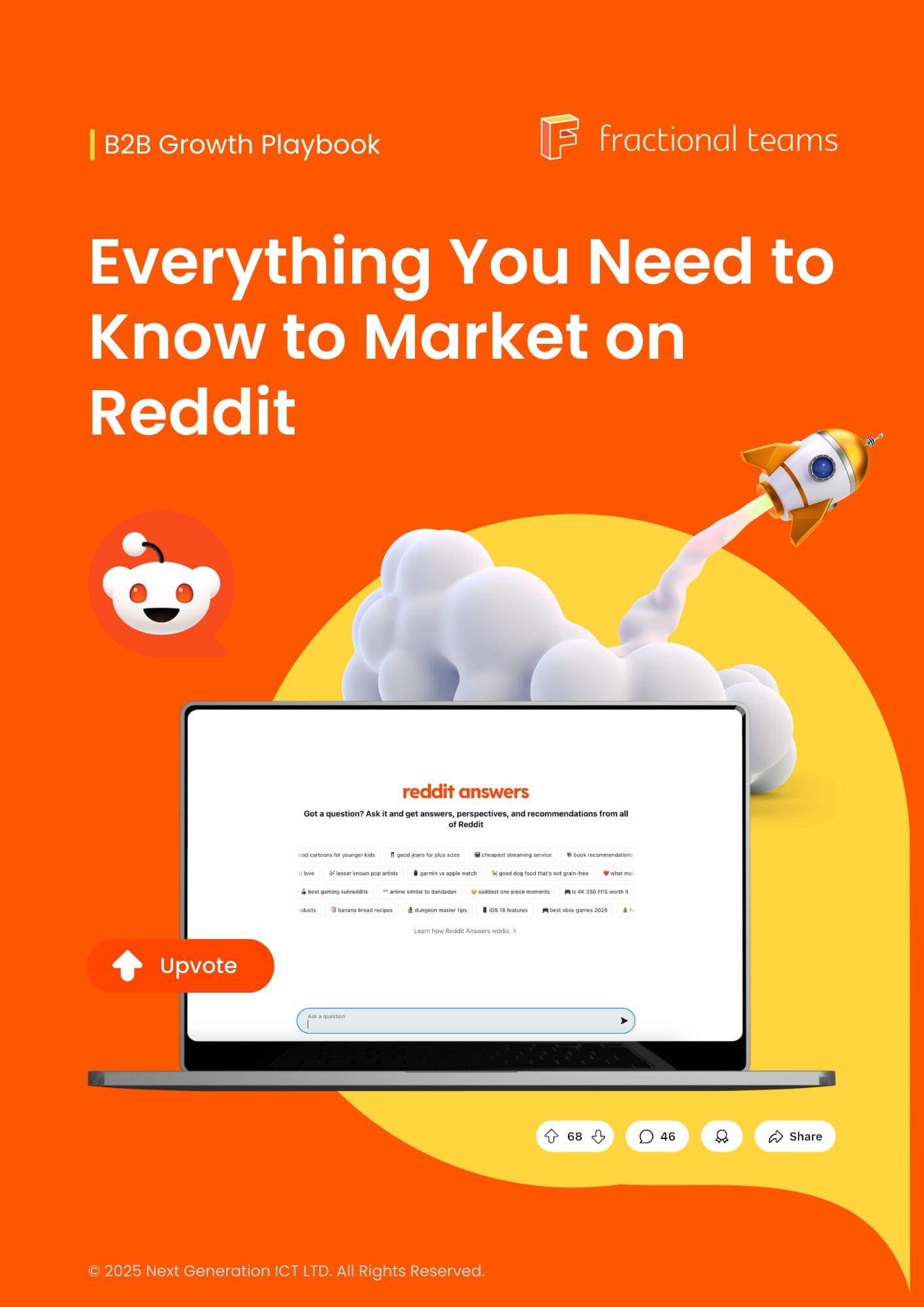
If you want to go deeper into using Reddit as a growth channel, check out our Reddit Marketing Playbook. It’s a complete guide for founders and marketers who want to generate awareness and leads organically, without spending on ads. The playbook includes step-by-step tactics, real examples, and community engagement strategies we’ve tested with real startups.
Get The Ultimate Reddit Playbook
The Reddit Playbook is based on real-world experience with B2B brands. It’s a practical guide for founders, marketers, and sales teams, covering both the basics and advanced strategies for engaging authentically, spotting opportunities, and growing your presence without relying on big ad budgets.
Quora, on the other hand, is a Q&A platform where questions are tagged by topic, and anyone can post an answer. It’s more controlled than Reddit and generally more focused on knowledge sharing than discussion.
Quora is still an underrated outlet for B2B marketing in 2026. The site has around 400 million monthly users globally, and a lot of professionals turn to Quora to ask for advice or learn new things. For example, someone might ask “What’s the best way to prevent data breaches in AWS?”. If you’re a cloud security startup, that’s a golden opportunity to write a clear, helpful answer. You could explain some best practices and subtly mention a solution (maybe noting how your tool addresses part of the problem).
Unlike Reddit, Quora actually encourages expertise showcasing. Many answers are written by industry experts or even company founders. About 60% of companies advertising on Quora are B2B, which shows that B2B marketers see value there (both organically and via ads). By consistently answering relevant questions, some startups have made Quora a top traffic source.
Those answers keep working for you over time. A good Quora answer can rank in Google and continue to attract readers (and clicks to your site) for years. The main challenge, as with Reddit, is the time investment. Writing a high-quality answer takes effort from someone who really knows the topic. But a few hours a week on Quora can pay off with steady inbound traffic and credibility.
Beyond these two, there are numerous niche communities and forums – from Stack Overflow (for coding questions) to Spiceworks (an IT pro community) and specialist forums for every sub-industry.
Engaging in those can be valuable if your audience is there. The pattern across all is similar: you cannot treat community sites like just another marketing channel. You have to give value to get value. That might mean participating without pitching, sharing knowledge freely, and building relationships in the community. Some startups designate a team member as a “community advocate” to do exactly this.
For instance, a developer tools company might have a developer advocate spend time each day on Stack Overflow and Reddit, helping users with technical issues (and incidentally raising awareness of their company’s expertise). Not every company has the resources for a dedicated role, but even founders can benefit from spending an hour a week lurking and engaging in the forums their customers frequent.
Why bother with these niche channels? One big reason is trust. B2B buyers trust content that isn’t coming directly from the vendor. A recommendation on a forum or a well-written answer on Quora often feels more credible than a whitepaper on a company’s website. By having a presence in these community-driven spaces, you insert your expertise into the conversation in a non-salesy way. Then, when those community members eventually enter “buying mode,” your brand is already on their radar as a helpful resource.
It turns out that Google’s page 1 often includes Reddit and Quora threads for long-tail questions. After a 2023 update, Reddit actually became one of the most visible domains in Google search results. If someone searches for “best project management tool for startups” or “firewall recommendations 2026”, there’s a good chance a Reddit discussion or Quora Q&A will show up on the first page. Users have even gotten into the habit of adding “reddit” to their search queries to find more authentic discussions. For your marketing, this means that participating in those discussions is indirectly an SEO strategy.
Your content on community sites can rank and drive prospects your way. For example, if your team has chimed in on a popular Reddit thread about “cloud monitoring tools”, a prospect searching Google might find that thread and see your helpful comment before they ever see your website.
In 2026, SEO and GEO isn’t just about your blog; it’s about your overall presence in the places people seek answers. So by engaging on Reddit and Quora, you’re not only interacting with users on those platforms, you’re also planting content that can be discovered via search. It’s a backdoor to visibility. This blending of community engagement and SEO is new for a lot of B2B marketers, but it’s becoming a key advantage.
An integrated, human-centric approach
In 2026, the best B2B marketing strategy is still simple: go where your buyers already are, and show up with something genuinely useful.
LinkedIn remains a core channel for reach, credibility, and momentum, especially as video and insight-led content continue to outperform overly polished brand promotion. Posts that teach, challenge assumptions, or share real experience can still drive strong visibility and inbound interest.
But serious buyers don’t stay on LinkedIn when they need honest answers. They move into places like Reddit, Quora, and niche forums, where peer-to-peer recommendations carry more weight than ads or thought leadership posts.
Winning B2B brands are combining both worlds: staying active in the mainstream channels, while building a consistent presence in community-driven spaces where decisions are shaped early.
And increasingly, those decisions are influenced by AI search tools that summarise, compare, and recommend vendors before a human even clicks through. Being discoverable now means being visible across feeds, threads, and structured content that AI can interpret clearly.
The goal is not just ranking well, but being present wherever buyers go to learn, validate, and decide.