BlogInsightsHow tech founders can solve early sales challenges?

How tech founders can solve early sales challenges?
Most tech founders are builders first. Coding feels natural, designing features feels rewarding. But then comes the part that doesn’t, which is getting people to actually buy what you’ve built.

three hands holding puzzle pieces

Table of Contents

Start small, then scale

If your product “can help everyone”, you’ll struggle to sell to anyone. The wider your audience, the blurrier your message.

Instead, pick the one group who feels the pain the most and speak directly to them. At this stage, that usually means founders doing the selling themselves. A handful of honest conversations with the right buyers will tell you more than thousands of impressions ever could.

We covered this in more detail in our article on why it’s important to validate demand before you start building the product.

Learn just enough sales to build a system

You don’t need to become a “salesperson”, but you do need consistency. Start by doing it yourself to understand what actually works. If you can’t close deals on your own, your first hire will likely fail. You need proof that the model works before you scale it.

A simple way to start:

  • Reach out to your target ICP on LinkedIn or via cold email.
  • Layer in credibility with content, such as use cases, case studies or short demos.
  • Collect feedback from every conversation and tweak your pitch.

Learn the basics of direct response marketing so you know what’s working and what’s not before hiring.

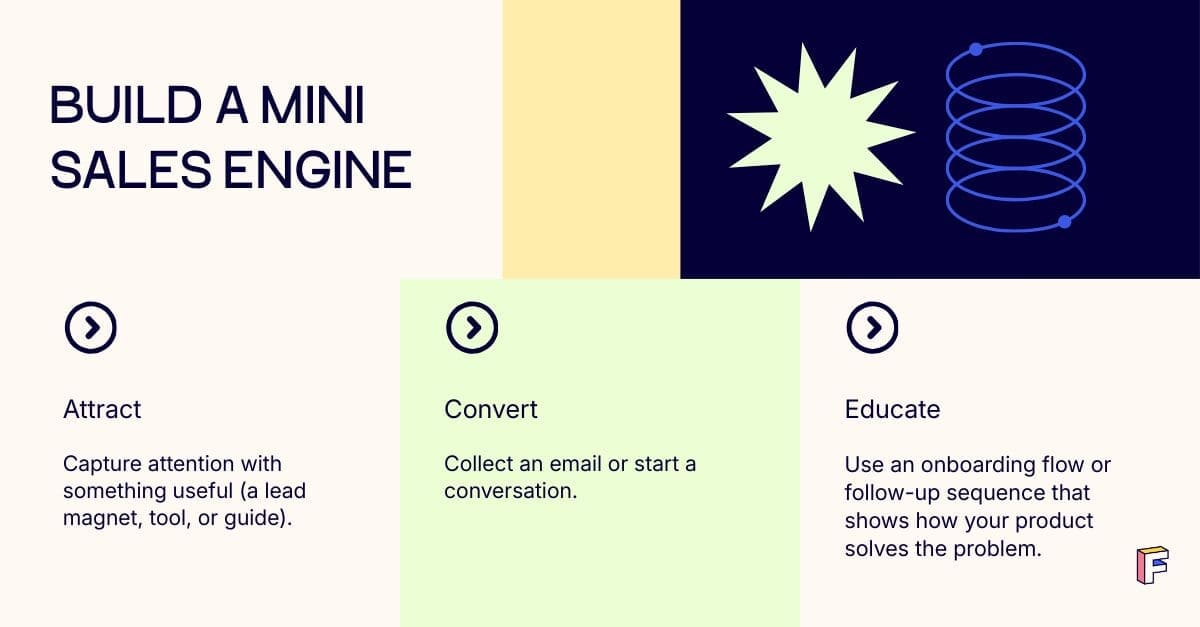
Build a mini sales engine

Create a simple flow instead of trying to do everything at once. Focus on one clear path that moves people from interest to action:

  1. Attract: Capture attention with something useful (a lead magnet, tool, or guide).
  2. Convert: Collect an email or start a conversation.
  3. Educate: Use an onboarding flow or follow-up sequence that shows how your product solves the problem.

If you’re unsure where channels like ads, Reddit, or content fit into this, we covered that in more detail in our article on how tech founders can approach marketing.

Once this engine runs nicely, the intimidation around “sales” fades because most of it is automated or systemised.

This shift towards systemised growth isn’t just a nice-to-have. Deloitte predicts that by 2026, most AI capabilities will be embedded directly into existing tools rather than used as standalone products. For SaaS, cloud, and telecom companies, that means growth will rely even more on repeatable sales and marketing systems instead of one-off campaigns or manual effort.

Do the unscalable

Personal outreach wins especially in the beginning. DM potential users. Post on niche forums. Share honest stories about building your product. 

These direct actions feel small, but compound fast, and they teach you far more than paid ads ever will.

When it makes sense to start hiring

Hiring sales too early often leads to frustration, unclear messaging, weak conversion, and wasted budget. But bringing in the right people after you’ve validated demand and built a basic system can accelerate growth without losing control. 

Instead of building a full in-house team too early, founders can plug into experienced sales and marketing teams who help turn early research into a working system.

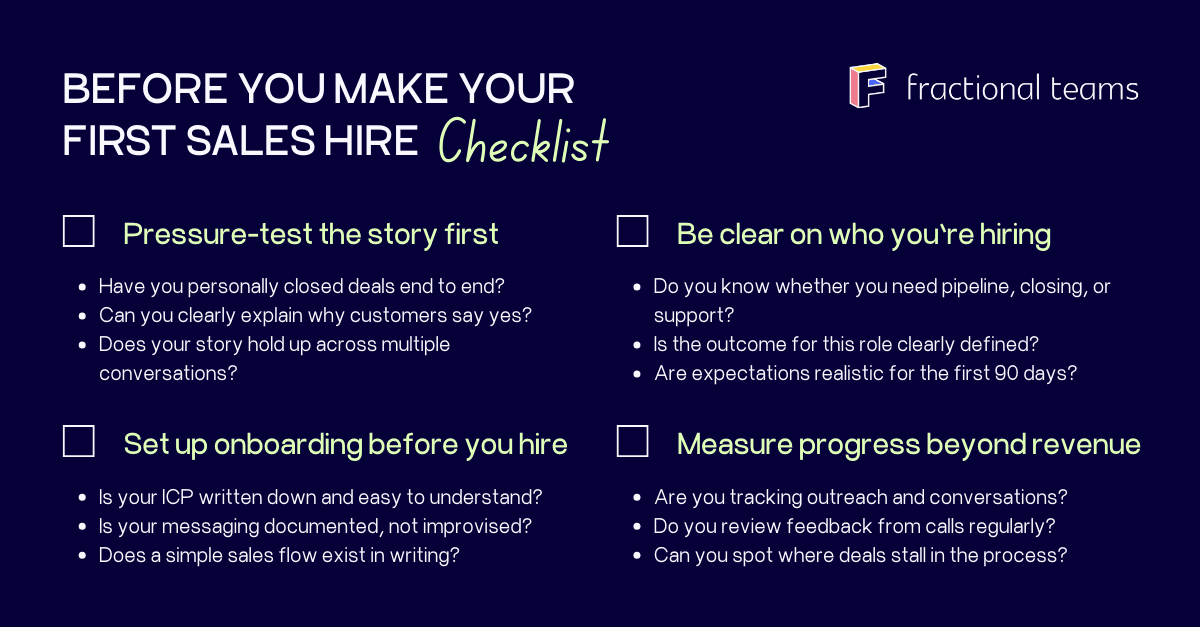
before you start hiring checklist

At Fractional Teams, we help B2B tech founders in Cloud, IT, and Comms turn early conversations, feedback, and traffic into a repeatable growth engine, without the risk of hiring full teams too early.

If this sounds familiar, we’re always happy to talk things through and help you figure out what to focus on next.

Takeaway

Sales isn’t separate from building, in fact, it is building. You’re testing hypotheses, collecting data, and constantly evolving toward product-market fit.

Each failed email or awkward call is feedback. The faster you learn, the faster you grow!

Hi! I'm Dariia Panchenko, Analytics and Community Manager at Fractional Teams. I write about the best B2B marketing strategies and practices.